




We caught up with Mark Curcio, winner of the ISTA Steel Derivatives Broker Award 2025, to chat through his recent win, how he got started in the steel derivatives industry, memorable trades and more!
Tell us about your role at StoneX and the company’s place in the market.
StoneX is a global financial services network delivering institutional grade market access, trading and clearing solutions across a wide range of asset classes worldwide. Within StoneX, I specialise in both ferrous and non ferrous derivative markets, providing clients with comprehensive market access, execution services and market intelligence, while supporting them in developing and implementing effective hedging strategies.
How did you begin your journey in the steel industry?
I began my career in 2011 as an LME broker on the non ferrous futures markets, a role that frequently involved working with clients who were also active in the steel markets. Over time, increasing volatility and growing client interest in steel derivatives created a natural progression for me to deepen my involvement in this sector. This exposure ultimately sparked my interest in the steel industry and has begun to lead my transition into the ferrous derivative markets.
What’s your favourite aspect of working as a steel derivatives broker?
I really value the networking and relationship building side of my work, along with the chance to guide clients through developing steel derivatives markets. Seeing clients succeed and capture the advantages of participating in these emerging futures markets is genuinely fulfilling.
From your perspective, how has the steel futures market evolved over the past decade?
Over the past decade, the steel futures market has transformed from a niche, low liquidity segment into a widely adopted and influential risk management tool. I have been directly involved in the steel derivatives space since the LME launched its Turkish Scrap and Rebar contracts in 2015, and it has been remarkable to witness how the market has matured.
Momentum accelerated significantly during the COVID years when heightened price volatility prompted a much broader range of participants to use derivatives to hedge their physical exposure.
Looking ahead, I’m confident that steel futures – particularly feedstock contracts such as steel scrap – will continue to lead the way, with other finished products following, as recycled steel and electric arc furnace (EAF) production become more dominant around the world.
What types of clients do you typically work with? And how has that changed since you started in this business?
Historically, interest in these contracts was driven primarily by physical trade houses and banks. Over the past three to four years, however, the recycling sector has become an increasingly significant part of the client base – particularly suppliers shipping deep sea cargoes to Turkey and hedging through steel scrap futures.
More recently, we’ve also seen strong demand from construction companies looking to lock in forward rebar prices, alongside growing participation from financial institutions eager to gain exposure to these rapidly developing markets.
Where do you think liquidity in steel futures markets is headed in the next couple of years?
We’ve already seen a great increase in liquidity on the LME Steel Scrap contract since 2020, and this has created a very strong foundation for the longevity of the contract. At StoneX, we continually receive interest from the recycling industry on trading LME Steel Scrap, which keeps adding to the volumes and open interest in the market. Having understood this importance of steel scrap and the ever-growing prominence on recycling processes, I still feel the LME Steel Scrap product with growing EAF demand, has the very real potential to mimic the significance and success of the SGX Iron Ore Market.
I am also a firm believer in HRC Futures, especially as we are seeing continued increasing number of trading firms using them to manage price risk on their physical contracts. This has particularly come into the limelight as more companies respond to increased volatility from tariffs, CBAM and shifting supply-demand dynamics.
Can you share a trade you’re particularly proud of broking? What made it stand out?
One trade I’m particularly proud of broking was assisting a new client with their first meaningful steel scrap hedge’s – totalling around 60,000 tonnes. What made this trade especially exciting was also what made it challenging: the size. At the time, this volume was significantly above the market’s typical trade size, so sourcing sufficient liquidity required a lot of coordination, persistence and market awareness.
Despite the initial hurdles, everything ultimately came together smoothly. Even more rewarding was seeing the hedge perform extremely well for the client in the months that followed. Knowing that we helped them navigate their first major hedge successfully – and that it delivered real value – was a great outcome.
How does it feel to win the LME-sponsored ISTA Steel Derivatives Broker Award? And what’s next for you?
I’m genuinely honoured to receive the LME sponsored ISTA Steel Derivatives Broker Award. It’s a meaningful recognition, and I’m grateful to our clients and the StoneX team for the trust and support behind it.
Looking ahead, my focus is on continuing to strengthen our ferrous metals offering, deepening client relationships, and contributing to the growth and development of the steel derivatives market. There’s a lot of opportunity in this space, and I’m committed to keep helping it drive forward.
What key themes do you anticipate for steel markets in 2026?
I’d say the steel markets are heading into 2026 on steadier footing, though the landscape re-mains shaped by shifting demand patterns and ongoing trade uncertainty. China is still the central player, but it’s no longer the engine driving global steel demand upward. Instead, most of the momentum is coming from India, MENA, and South Asia, while developed economies continue to see steel-sector activity moving at the more subdued pace we’ve become accustomed to.
And of course, we can’t overlook the ongoing discussions around CBAM. With limited clarity on how it will ultimately influence EU trade flows – and broader trade policy still in flux – there’s a fair amount of uncertainty about how these factors will reshape the market as we move further into 2026.
Mark Curcio
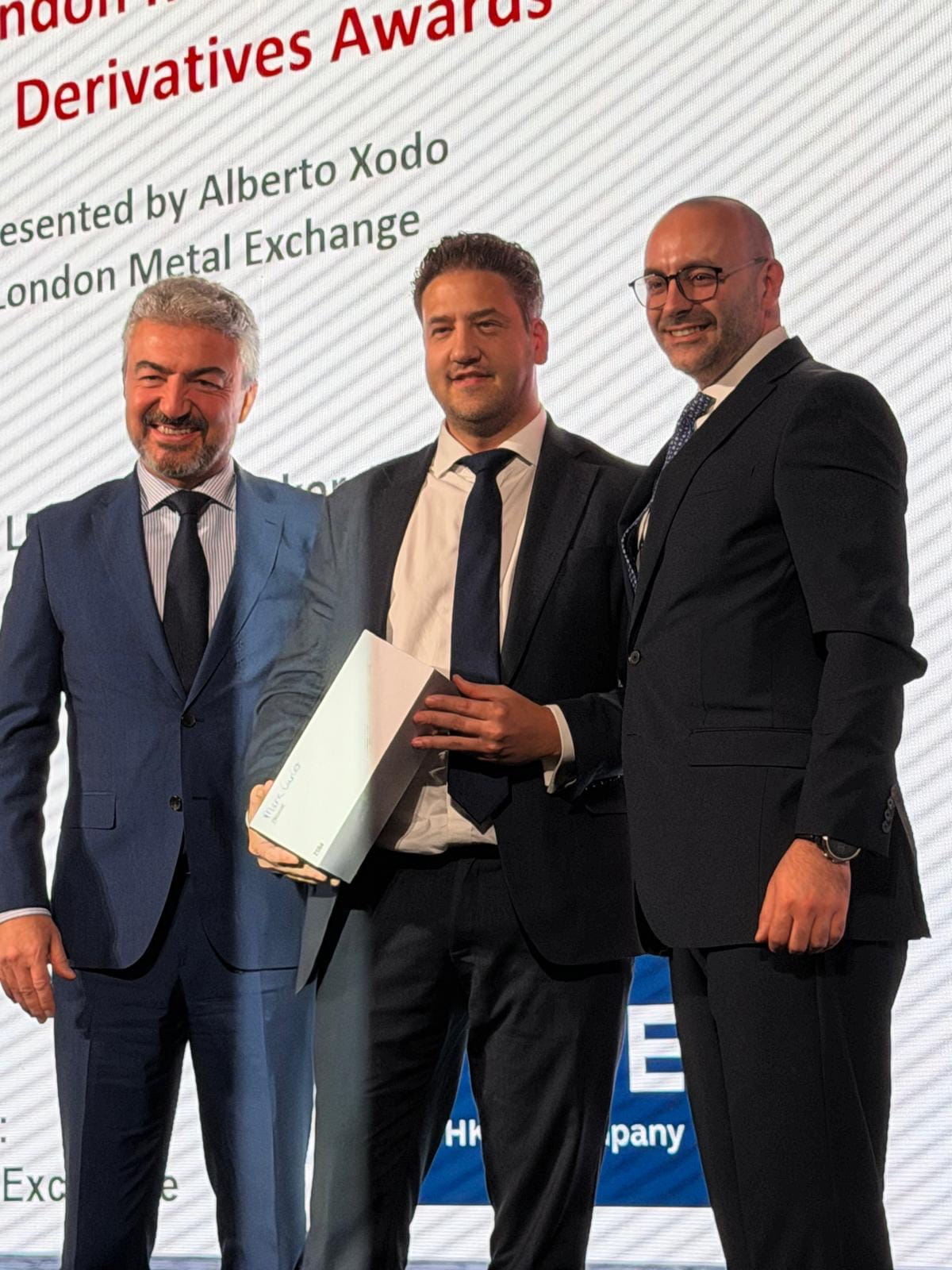
Mark Curcio, Metals Trader at StoneX, was recently awarded the LME-sponsored ISTA Steel Derivatives Broker Award at the annual International Steel Trade Association lunch.