




Welcome to the September 2026 edition of the Sustainability Spotlight.
In this edition, we are excited to share the latest news from across the LME’s sustainability initiatives, including progress on sustainable metals premia, updates on responsible sourcing, and developments following the physical markets consultation and discussion paper earlier this year.
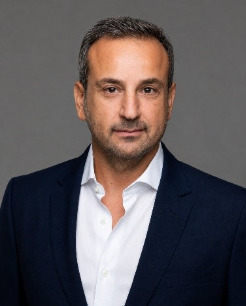
We are also pleased to feature Bashar Mohamadieh, General Manager of Commodity Pricing and Analysis Limited (CPAL), as our guest writer for this edition’s Market Insight, where he shares his perspectives on how sustainability is reshaping the metals market.
CPAL’s public consultation on proposed European aluminium P1020 assessments
On 5 February 2026, the LME’s Dubai-based fellow subsidiary, CPAL, launched LME Insight, a new website providing news and analysis across the base metals market, with a strong focus on metals which are central to the green transition and adjacent industries. Since its launch, CPAL has published a range of in-depth analytical articles weekly, and from May 2026, has also provided weekly reviews of LME base metals markets covering aluminium, copper, zinc, lead, nickel and tin.
On 3 September, LME Insight published its first European Aluminium P1020 assessments with fresh insight into prevailing European physical premium levels and market dynamics. This builds on previous market engagement on the pricing methodology and the proposed assessments will be governed by the output of this – the LME Insight Pricing Methodology, which establishes a common framework for price discovery, data hierarchy, normalisation, expert judgement, governance and publication standards across all LME Insight assessments, supporting consistency, transparency and methodological integrity.
You can read the full specifications of LME Insight’s proposed P1020 premiums here.
Responsible sourcing
On 9 June, the Responsible Minerals Initiative (RMI) achieved full recognition under the LME Responsible Sourcing Framework, fully meeting the LME Track A requirements for both the standard and its implementation. The full list of approved partners can be found here.
As part of the next phase of our responsible sourcing transparency efforts, Red Flag Assessments (RFAs) submitted under Track C will be published in an attributed format starting in 2027.
LME physical markets reform 2026
On 31 July, the LME published its Physical Markets Reform Feedback Analysis and Decision Notice, summarising feedback received in response to the Physical Markets Consultation and Discussion Paper published in March 2026, together with a further consultation on physical markets enhancements (including streamlining brand listing requirements and outside storage of primary aluminium in Hong Kong). While the consultation closed on 11 September, we highlight below two key sustainability-related developments – copper certificates of analysis, and the automation of metal reports – from the Decision Notice, which is available in full here.
Copper Certificates of Analysis and indelible markings
To enhance traceability across the copper supply chain, the LME will require all LME-listed copper to be accompanied by a Certificate of Analysis (CoA) and have a Production Cast Reference (PCR) indelibly marked on the metal. The LME believes these measures will strengthen traceability, support the continued digitalisation of physical markets, improve transparency and efficiency, and align copper requirements with those already applicable to other LME-listed metals.
The CoA requirement will take effect on 1 January 2028. A two-year transition period, from 1 January 2028 to 31 December 2029, will allow producers to use either production labels or indelible markings to identify the PCR. From 1 January 2030, however, all LME-listed copper intended for warranting must carry a compliant indelible PCR marking, and labels alone will no longer be accepted.
Metal report automation in LMEpassport
From 1 December 2026, warehouse companies will be required to comply with the updated Warehouse Agreement following the LME Physical Markets Reform 2026 Decision Notice. Under the revised requirements, metal reports must be submitted at the point of warrant issuance via an API connection to LMEpassport or, where automation is not yet feasible, through Excel file uploads.
This change replaces the current requirement to provide metal reports only upon cancellation or request and is expected to improve the timeliness, consistency and transparency of metal data reporting across the LME ecosystem.
Further details on these and other decisions arising from the consultation can be found in the full Decision Notice.
Carbon Border Adjustment Mechanism (CBAM)
Last year, the LME introduced annual CBAM emissions reporting for LME-listed primary aluminium, aluminium alloy and NASAAC brands, requiring them to submit emissions data annually through LMEpassport, in line with the EU regulation.
The deadline for submitting emissions data for the 2025 reporting year passed on 1 September 2026. While independent verification was not required for the current reporting cycle, the next phase of the LME's CBAM requirements is now approaching. In line with the EU CBAM Regulation, reported emissions data will need to be independently verified by an accredited third party for the 2026 reporting year onwards, with verification becoming mandatory from 1 September 2027. Find out more about the LME’s CBAM requirements here.
LME Week 2026
LME Week 2026 will take place in London from 19-23 October. The week opens with the LME’s flagship conference, the LME Metals Seminar, which brings together senior leaders from across the global metals and mining industry to discuss market outlooks, key industry challenges, and major trends shaping the sector.
A full breakdown of the agenda and information on how to register for the seminar are available on the LME webpage.
Market Insight
This edition’s Market Insight comes from Bashar Mohamadieh, the General Manager of Commodity Pricing and Analysis Limited (CPAL), where he leads the development of a new independent price reporting and market analysis business covering the global metals markets. He has more than 20 years of leadership experience across energy, metals, natural resources and industrial markets, with a background in commercial strategy, business growth, market development and product commercialisation. Before joining CPAL, he held senior leadership roles at Wood Mackenzie, including Global Head of Sales for Commodities.
From Disclosure to Price Discovery: How Sustainability Is Entering Metals Markets
The metals industry has always evolved to reflect the changing needs of the global economy. Standardised contracts enabled international trade, benchmark prices brought transparency to physical markets, and more recently, digitalisation has improved the speed and accessibility of market information.
Today, another evolution is underway.
Across the metals value chain, buyers increasingly want to understand not only the quality of the metal they purchase, but also how it was produced. Carbon emissions, responsible sourcing and wider sustainability credentials are becoming important commercial considerations for manufacturers, traders and investors alike. As demand for this information grows, so too does the need for markets to reflect it transparently.
The challenge is no longer simply disclosing sustainability information. It is enabling the market to determine whether those attributes carry value.
From transparency to price discovery
Over the past decade, the London Metal Exchange has led the development of a comprehensive set of sustainability initiatives designed to raise baseline standards and reporting, and improve transparency across the physical metals market through a portfolio of sustainability metrics, recognising that a focus on carbon alone does not represent the real spectrum of sustainability concerns.
This work has included introducing responsible sourcing requirements for all LME-listed brands, launching LMEpassport as a digital platform for sustainability disclosures, and including CBAM emissions reporting requirements to help market participants respond to evolving regulatory reporting requirements. Together, these initiatives provide market participants with a trusted framework for understanding how metals are produced and for comparing sustainability credentials across producers.
Transparency is at the heart of this but has the potential to add so much more.
Knowing the carbon footprint of a tonne of aluminium or the sustainability credentials of a copper producer does not, on its own, establish market value. Markets also need an independent mechanism to determine whether buyers are willing to pay a premium for metals with verified sustainability attributes.
That is the role of CPAL, which will provide the independent price-discovery mechanism that enables the market to determine whether, and to what extent, verified sustainability attributes carry commercial value.
Building the next layer of market transparency
Building on the foundations established by the LME's sustainable metals framework, CPAL is developing independent sustainability premium price assessments for LME-listed metals.
These assessments are designed to complement the underlying LME benchmark price by measuring the additional premium that buyers may be willing to pay for metal meeting clearly defined sustainability criteria.
The methodology applies objective eligibility requirements, including LME-listed brands, sustainability information disclosed through LMEpassport, defined carbon intensity thresholds and recognised third-party sustainability standards. Premium assessments are then derived through evidence gathered from physical market transactions, secure bilateral reporting and wider market engagement.
Together, the LME's sustainability foundations and CPAL’s independent sustainability premium assessments represent complementary parts of the same market evolution: the LME provides the infrastructure and transparency that make sustainability information available, while CPAL enables the market to discover whether, and to what extent, those sustainability attributes carry commercial value.
Challenges remain
Developing any new benchmark requires both confidence and liquidity.
While sustainability has become an increasingly important procurement consideration, trading activity remains concentrated in relatively small segments of the physical market. Building sufficient market participation to support robust price assessments will take time.
There is also the challenge of consistency. Sustainability encompasses far more than carbon emissions, while reporting methodologies continue to evolve across jurisdictions and commodities. Establishing clear, transparent and widely accepted definitions will remain critical to market confidence.
Ultimately, sustainability premiums will only succeed if they reflect genuine commercial behaviour rather than theoretical values.
Looking ahead
The direction of travel appears increasingly clear.
Governments are strengthening disclosure requirements. Manufacturers are seeking greater visibility across their supply chains. Investors are paying closer attention to sustainability performance. At the same time, producers are investing to reduce emissions and demonstrate responsible production practices.
As these trends continue, sustainability information is likely to become an increasingly important component of commercial negotiations.
In the short term, CPAL aims to support this evolution by delivering transparent, independent sustainability premium assessments under robust governance and clearly defined methodologies.
Over the longer term, as participation grows and markets mature, sustainability characteristics could become another recognised dimension of metals pricing alongside quality, location and logistics.
The metals market has always evolved in response to changing commercial realities. Sustainability is unlikely to be any different.
The journey from disclosure to price discovery is still in its early stages, but it represents an important step towards allowing the market itself to determine the value of more sustainable production.
Want to get involved?
Interested in contributing to a future newsletter or getting involved in a working group? Email us!